Author: Hastest Engineering Team

  • What is HAST Testing?

    What is HAST Testing?

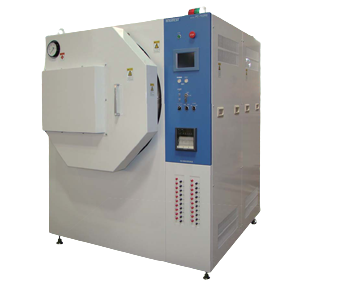
    Understanding what is HAST testing is essential for engineers qualifying semiconductors, electronic packages, and advanced materials for long-term reliability. HAST (Highly Accelerated Stress Testing) uses elevated temperature and humidity under pressure to accelerate moisture-driven failure mechanisms in a fraction of the time required by conventional THB testing.

    What Is HAST Testing? A Complete Overview

    What is HAST Testing?

    In effort to improve the reliability of products, many different industries, just to mention a few, including semiconductor, pharmaceutical, LED and solar companies turn to HAST testing as a shorter alternative to THB Testing.

    The acronym “HAST” stands for “Highly Accelerated Temperature/Humidity Stress Test.” The acronym “THB” stands for “Temperature Humidity Bias.” THB testing takes 1000 hours to complete, whereas HAST Testing results are available within 96-100 hours. In some cases, results are available in even less than 96 hours. Due to the time saving advantage, the popularity of HAST has continuously increased in recent years. Many companies have completely replaced THB Test Chambers with HAST Chambers.

    THB (Temperature/Humidity/Bias) holds 85°C/85% RH condition while bias loads are applied to the samples. It has become less useful in recent years due to the improved packaging and passivation materials.

    Highly Accelerated Stress Test (HAST) was formulated to decrease the test time needed to get useful results. Due to time constraints on projects, engineers look for a faster solution to learn if their product meets the standards of their particular industry. HAST testing uses a high temperature (105°C), high relative humidity (about 85%), and high atmospheric pressure conditions (up to 4 atm). HAST testing loads the specimen with heat and moisture stresses to find the concealed defects that could cause failure for the user relying on it. In testing products for reliability, defining the test conditions is the primary step. A common standard used for HAST is JEDEC JESD22-A110. Test conditions must meet application conditions in order to make testing relevant. HAST Testing has also in turn become a more cost effective alternative.

    HAST is recommended for the shortened qualification of any change that can potentially affect the corrosion resistance of the product. Therefore, a new package and/or a new fab assembly site demands HAST data. HAST is also recommended for changes in the die glassivation, metallization or thin film resistors, as well as changes in the molding compound.

    HAST Testing continues to find more applications for accelerated testing of newer materials and products.

    For more information, see our guide on how to select a HAST chamber.

  • Rain & Salt Fog Test Chamber update

    Rain & Salt Fog Test Chamber update

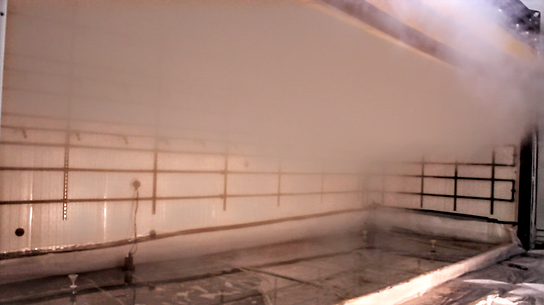
    This project describes how Hastest Solutions built a custom rain and salt fog test chamber for the United States Navy meeting MIL-STD 810G and ASTM B117 requirements. The chamber measures 40 feet wide, 20 feet deep, and 15 feet tall, making it one of the largest combined rain and salt fog test chambers built for military use.

    Rain and Salt Fog Test Chamber Project: US Navy MIL-STD 810G

    Rain & Salt Fog Test Chamber update

    Hastest Solutions Inc has recently manufactured their customized Rain & Salt Fog Test Chamber built according to MIL-STD 810G and ASTM B117 for the US Navy. This test chamber measures 40 feet in width, 20 feet in height and 15 feet in depth. Hastest Solutions Inc continues its efforts to think globally and act locally. Majority of the materials used in this chamber have been bought from local vendors. This state of the art test chamber has been designed with leading edge technology, ease of use, energy and resource efficiency in mind. Some of the test chamber’s unique features include a PLC Controller, energy efficient lighting and water recirculation system, customized nozzles to simulate rainfall, and a highly specialized customized automatic door.

    The PLC Controller has been designed not only for the end user’s ease of use but with capabilities for adding future requirements for more functionality and features without even changing the hardware. Not only can the user remotely operate this unit, but also setting up the profile for all the different tests can be done with just a few steps.

    The water recirculation system maximizes the water usage. The water recirculation system has been intended to save energy and resources. Due to the tests requiring large tanks of water to be used, the engineers decided to create a system which would allow minimum energy, water and resource wastage. The customized nozzles installed distribute the rainfall with a technique that also minimizes water waste.

    Further contributing to energy efficiency, LED lamps were the source of light selected. Widespread use of LED lighting is one of the greatest potential impacts on energy savings in the United States. The highly specialized automatic door has a patented direct drive system minimizing maintenance alongside extra measures for superior safety and a mobile top and bottom edge providing a virtually perfect seal.

    For more information, see our guide on more custom test chamber projects by Hastest Solutions.

  • What is Salt Spray Testing?

    What is Salt Spray Testing?

    Understanding what is salt spray testing is critical for engineers evaluating corrosion resistance of metals, coatings, and finished assemblies. Salt spray testing exposes specimens to a fine mist of sodium chloride solution in a controlled chamber to simulate long-term marine or industrial corrosion in an accelerated timeframe.

    What Is Salt Spray Testing? ASTM B117 Explained

    What is Salt Spray Testing?

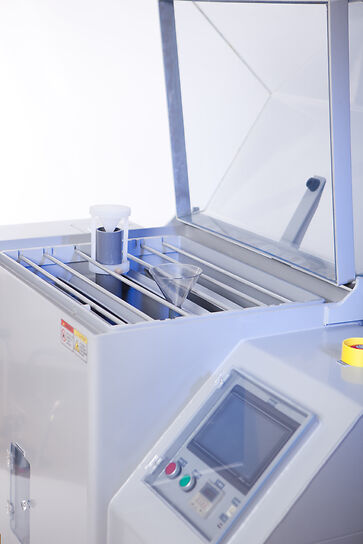
    A Salt Spray Test is an accelerated laboratory test providing a controlled corrosive environment to determine the rusting performance of a product in the field.

    Salt Spray Testing is a requirement in a wide range of industries such as automotive, military, paint, and research institutions. It can be conducted on bare material as well as painted or coated material.

    The well known ASTM-B117 salt spray test standard is commonly used. A solution of sodium chloride is sprayed at an angle between 15° to 30°. The temperature maintained within chamber is constant. The duration of test can be anywhere between 24 hours to 1,000 hours. Samples are rotated at regular intervals to allow even coating of the salt solution. The salt spray solution will put materials in a very harsh environment which will rust the surface and determine the result of damage inflicted by salt as well as a high chloride content.

    This test helps researchers and product designers develop products such as paints, coatings, chemical treatments, paint pretreatments applied to metallic coated steel sheet products or any material that can be more resistant to salt damage.

    For more information, see our guide on contact Hastest Solutions for salt spray chamber information.

  • Sustainability

    Sustainability

    At Hastest Solutions, sustainable test chambers are a fundamental engineering commitment. We design and build environmental test chambers that last 20 or more years through premium materials, modular architecture, and conservative design margins that reduce energy consumption and eliminate premature replacement.

    Sustainable Test Chambers: Engineering for Longevity

    Sustainability

      Sustainability is the capacity to endure. It is characterized by the increased success of a product after many cycles of usage leading to its success and popularity therefore benchmarking it under the sustainability phenomenon.

      As an end user of environmental test equipment, you will want to consider the benefits of buying a sustainable product obtained though effective equipment planning and procurement. Hastest Solutions helps the end user define their needs and offers cost effective solutions that will benefit the customer in the long run.

      Some characteristics implemented into equipment planning and procurement for sustainability are looking for durable and robust products, ease of use and meeting safety standards. The range of products at Hastest Solutions Inc, include but not limited to, temperature humidity chambers, settling dust chambers,blowing sand and dust chambers, HAST (highly accelerated stress test) chambers meet the requirements mentioned above. The HAST Chamber is an example of a robust and durable product. The oldest generation manufactured twenty years ago is still running at optimum performance with need for replacement of basic wear and tear parts only. The temperature and humidity chambers incorporate user friendly controllers for technicians to save time on learning operation of a new unit and increase productivity during usage. Our chambers have met safety and manufacturing standards through third party certifications of compliance and now carry stamp of approval for CSA International (Canadian Standards Association) UL compliance.

      There are many definitions for sustainability. Many refer it to a goal but Hastest Solutions Inc constantly tries to improve on sustainability therefore using it more as a guideline or “journey” to the ultimate destination of a quality product. The demonstration lab at Hastest Solutions Inc located in San Jose, CA carries many of the products listed and the sustainability can be experienced even before purchase. Hastest Solutions Inc strongly encourages the user to visit the lab during procurement process.

    For more information, see our guide on learn more about Hastest Solutions and our sustainability commitment.

  • Temperature and Humidity Testing

    Temperature and Humidity Testing

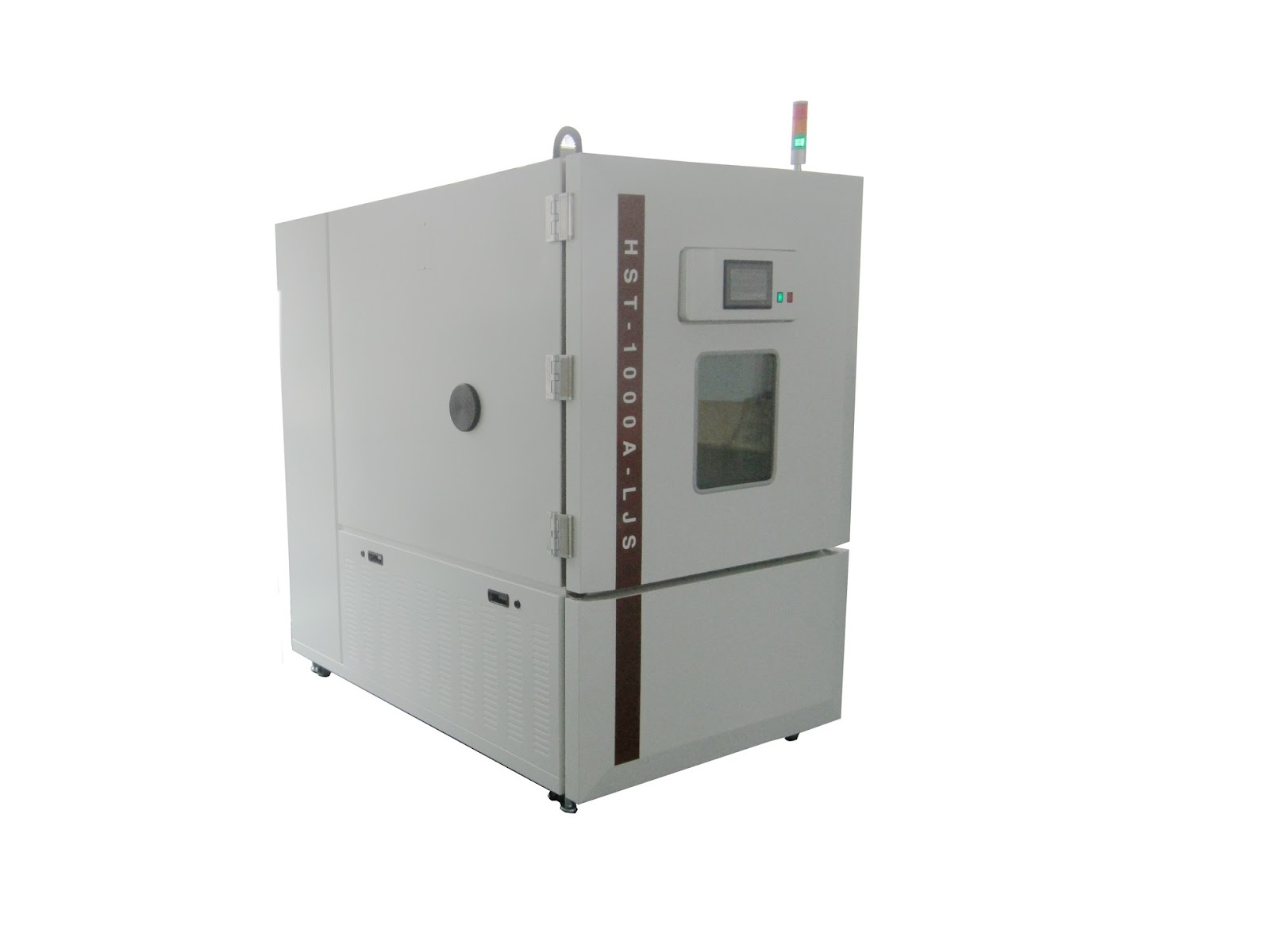
    Temperature and humidity testing is one of the most widely used environmental qualification methods in electronics, automotive, aerospace, and defense. By exposing products to defined temperature and humidity conditions, engineers can rapidly identify moisture-sensitive failure modes and validate long-term product reliability.

    Temperature and Humidity Testing: Standards and Applications

    Temperature and Humidity Testing

      Temperature and Humidity tests establish how components and assemblies behave in harsh environments involving high temperatures and high relative humidity. The effect that humidity can have on components or assemblies is crucial to the service life of the product. The tests involve constant temperature and humidity, cycling of temperature and humidity, temperature-humidity bias (THB) tests.

      Temperature Cycle Testing also referred to as temp cycling, determines the ability of parts to resist extremely low and extremely high temperatures, as well as their ability to endure cyclical exposures to temperature extremes. Two industry standards that govern Temp Cycle Testing are the Mil-Std-883 Method 1010 and the JEDEC JESD22-A104.

      THB testing involves the following stress conditions: 1000 hours at 85 deg C, 85% RH, with bias applied to the device. The bias applied is usually designed to simulate the bias conditions of the device in its real-life application, maximizing the variations in the potential levels of the different metallization areas as much as possible. An operational test that evaluates the reliability of devices in humid environments follows Mil-Std-810-F Method 507.3.

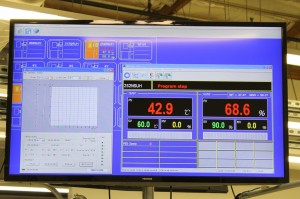
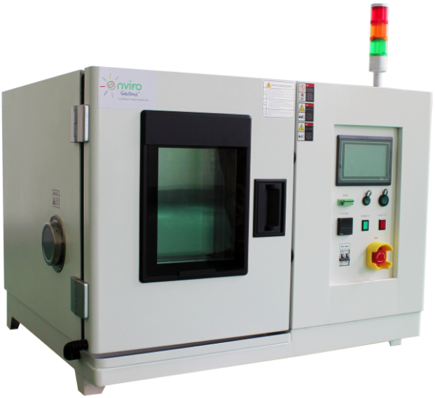
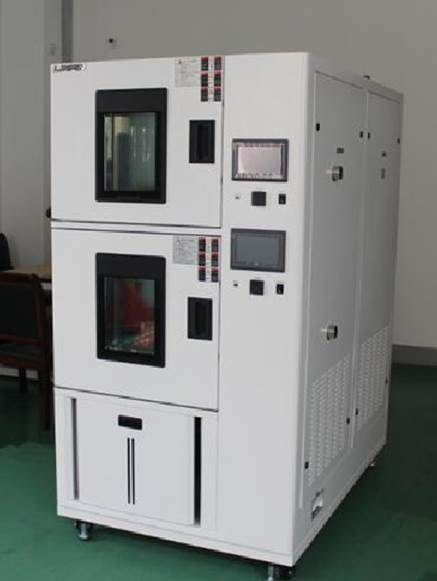
      Environmental test chambers, particularly temperature and humidity chambers are used to test components under test conditions and Mil Standards described above.

    For more information, see our guide on HAST testing as a faster alternative to temperature and humidity testing.

  • How to Select a HAST Chamber

    How to Select a HAST Chamber

    Knowing how to select a HAST chamber correctly can mean the difference between a reliable long-lived investment and years of maintenance headaches. This guide covers the critical selection criteria: test volume, pressure rating, temperature accuracy, controller quality, patent position, parts availability, and after-sales support.

    How to Select a HAST Chamber: Key Criteria for Buyers

    How to Select a HAST Chamber

    HAST (Highly Accelerated Stress Test) Articles:

    Part I

    HAST CHAMBERS

    When you are looking for a HAST Chamber keep two key aspects in mind:

        1. 1. A HAST CHAMBER is a Precision Scientific Instrument – It is NOT a run-of-the-mill Temperature and Humidity Chamber. It is a piece of testing equipment required to perform Highly Accelerated Stress Test under very precise set conditions of Temperature & Humidity under Pressure.
        2. 2. NOT ALL HAST CHAMBERS ARE CREATED EQUAL

    Anyone looking for a HAST CHAMBER should keep these two key points in mind. If not, they will face the same problems as those who did not consider the above are facing today.

    Every HAST CHAMBER manufacturers’ specifications appear to meet JEDEC and the JIS standards but in practice may not. Unfortunately, most test engineers do not discover these short comings until it’s too late. Understandably, no one wants to admit a big mistake in the purchase of a fairly expensive piece of capital equipment so the inaccurate testing just continues, undercover.

    A truly objective and informed HAST Chamber Manufacturer MUST:

        1. Guarantee the results and performance of a HAST Chamber over long periods of testing and time. Means: Non-Condensing Atmosphere & absolutely No Rain….These two factors are enough to create Leakage paths leading to erroneous failure conditions.
        2. Explain why moving air with a fan in a HAST environment is an unnecessary complication and can be detrimental to the test. Fans create hot spots and inconsistent atmospheric conditions. These air circulating units also require continuous costly replacements.
        3. Guarantee that the Chamber will not leak water onto the lab floor.
        4. Make clear if superior dual-chamber technology, a proven method for over forty years, is offered in the design of the HAST CHAMBER.
        5. Inform if certain costly key parts/components in the HAST CHAMBER must be replaced frequently and why.
        6. Admit that a larger chamber may be less accurate than the standard size.
        7. Clarify why or why not the wet-bulb, dry-bulb is required in a HAST CHAMBER. Inform the customer if frequent service calls are required to maintain it’s HAST CHAMBER.
        8. Inform the customer that ONLY one company in the world has the patents and rights on this UNIQUE DUAL CHAMBER technology for a HAST CHAMBER.
        9. Enlighten the customer that there is only ONE company in the world that will provide long term parts and labor warranty for a HAST CHAMBER at almost no cost or very minimal costs to them.
        10. Notify the customer that there is ONLY one company in the world that has its previous five generations of HAST CHAMBERS still in operation through out the world – A span of OVER THREE DECADES.

    Just because a manufacturer makes good Temperature and Humidity Chambers, is not a justification that the same manufacturer can make good precise HAST CHAMBERS. Same goes for aesthetics. A pretty paint job does not necessarily mean better technical and or improved performance. Not by a long shot. One cannot compare apples to oranges.

    Part II

    Why is it that there are hundreds of manufacturers making Temperature and Humidity and other Test Chambers today, but there are only a handful of them making the HAST CHAMBERS, even though this technology is over forty years old? The answer is that this system is too precise and is protected by several international patents to be made by just anyone. It has to be made by the specialists in this unique field.

    Here again the Rule number from two Part I applies.

    “NOT ALL HAST CHAMBERS ARE CREATED EQUAL”

    Consider the high profile list of satisfied customers who have been enjoying the benefits of the HIRAYAMA HAST CHAMBER for over three decades. Contact any Hirayama customer and you will find few to none willing to part with their Hirayamas’, regardless of whether the chamber is 20 days old or 20 years old. It is extremely difficult to find a used Hirayama for sale.

    Just because a manufacturer makes good Temperature and Humidity Chambers, is not a justification that the same manufacturer can make good precise HAST CHAMBERS. Same goes for aesthetics. A pretty paint job does not necessarily mean better technical and or improved performance. Not by a long shot. One cannot compare apples to oranges.

    Furthermore, almost every major Commercial Test Lab in the Bay Area and around the world that does HAST TESTING uses Hirayama HAST Chambers. Commercial Test Labs demand the best because they are dealing with demanding customers, who prefer to blame the test equipment when a failure occurs rather than their test specimen/s under test. No lab can afford to take that chance by using inferior chambers. Those who have done so can say good bye to their HAST business.

    When you purchase a Hirayama HAST CHAMBER, you get a Quality HAST system made to the highest standards of manufacturing and engineering excellence. This HAST system will perform year after year and will meet specifications year after year with a low to no maintenance required.

    Part III

    Benefits of the HIRAYAMA HAST Chambers-

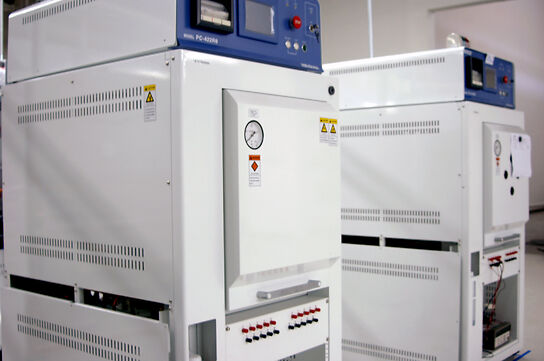
    The Green System from Hastest Solutions

      1. Non-Condensing atmosphere
      2. No Rain
      3. Fully self contained – No special facilities or plumbing required
      4. Plug & Play – Connect AC Power, Connect the Drain and you are ready to go
      5. Occupies only 9 sq ft of footprint
      6. Abundant Safety Features
      7. Dual Chamber technology
      8. Virtually maintenance-free
      9. No Reach-in requirement – Specimens come out in a tray
      10. Chamber never gets hot
      11. Without FANS – A uniform non-condensing atmosphere
      12. Self-Cleaning Features
      13. On-Screen Self Diagnostics
      14. Problem identification and suggested solutions-On Screen
      15. Does not require operator computer training-Simple instructions
      16. GREEN MACHINE:
        1. Low Power Consumption
        2. No Wastage
        3. Does NOT produce any Waste By-Products
      17. Unique Door Locking mechanism
      18. Self-locking door with built in safety features
      19. Drain could be a simple bucket
      20. Exceeds all levels of manufacturing & workmanship standards
      21. Every connection, every wire identified throughout the system
      22. Electronic system totally isolated from the main chamber and plumbing
      23. Stainless steel plumbing circulates all incoming water
      24. Non corrosive atmosphere

    For more information, see our guide on what is HAST testing and why chamber selection matters.
  • Reliability Tests of Ultrasonic Bonding Methods Using HAST and THB

    Reliability Tests of Ultrasonic Bonding Methods Using HAST and THB

    This technical study examines ultrasonic bonding HAST testing as a method for evaluating the long-term reliability of wire bonds and die-attach interfaces under accelerated moisture stress. Both HAST and THB methods are applied to ultrasonic bond specimens to identify failure modes at the package and board interconnect level.

    Ultrasonic Bonding HAST Testing: Test Methodology and Findings

    Reliability Tests of Ultrasonic Bonding Methods Using HAST and THB

      HAST (Highly Accelerated Stress Test) Articles:

      Reliability Tests of Ultrasonic Bonding Methods Using HAST and THB

      Reliability is one of the most important questions in any application, on both the package (component) and the board (system) levels. The paper describes some life time test methods, equipment and processes for evaluating the most important reliability parameters. It gives a detailed description of the most effective and economical HAST (highly accelerated stress test) and THB (temperature humidity and bias) methods.

      The paper presents some new results of using HAST and THB technology for the following fields of reliability and life time tests: reliability analysis of assembled SMD passive components; water addition speed tests. Finally, the paper particularly deals with ultrasonic bonding technology, the bonding and testing machines. It introduces some measurement test results on the bonding force before and after a HAST and THB test.

      This paper appears in: Electronics Technology: Meeting the Challenges of Electronics Technology Progress, 2004. 27th International Spring Seminar

    For more information, see our guide on HAST testing fundamentals and JEDEC standards.

  • A Comparison of HAST to Conventional THB Testing

    A Comparison of HAST to Conventional THB Testing

    The comparison of HAST vs THB testing is a critical decision for reliability engineers qualifying plastic-encapsulated components and other moisture-sensitive devices. HAST uses pressurized conditions above the dew point to dramatically reduce test time from 1,000 hours to fewer than 100 hours compared to conventional THB.

    HAST vs THB Testing: Head-to-Head Technical Comparison

    A Comparison of HAST to Conventional THB Testing

      HAST (Highly Accelerated Stress Test) Articles:

      A Comparison of HAST to Conventional THB Testing

      The use of HAST (highly accelerated stress test) for reliability assessment of nonhermetic packages is driven by reliability improvements in plastic packaging and passivation materials. Conventional Temperature/Humidity/Bias (85/85) testing is inefficient in measuring these reliability performance improvements. HAST is a highly effective and repeatable assessment tool for evaluating plastic package reliability provided appropriate controls are used. Important HAST to conventional 85/85 testing on 16Kx4 commodity SRAM’s. Data from multiple HAST runs on different lots of the same SRAM test vehicle shows the repeatability of the stress test. Data from the same SRAM part type stressed in 85/85 shows lower comparative accelerations for the same failure mechanisms. Surprisingly, metal-corrosion is not the dominant failure mechanism in these tests. Systematic AC parameter shifts are the predominant cause for failure. A relative acceleration factor for HAST over 85/85 testing is extracted based on AC parameter shifts in plastic-packaged parts succumbing to a moisture-driven failure mechanism. This data provides another example of HAST capability and an indication of the type of failure mechanisms that can be found with today’s plastic packaging materials.

      This paper appears in: Electronic Components and Technology Conference, 1994. Proceedings, 44th, Abstract Plus

    For more information, see our guide on complete guide to HAST testing methodology.

  • Electrochemical Migration…Under Highly Accelerated Stress Conditions

    Electrochemical Migration…Under Highly Accelerated Stress Conditions

    Electrochemical Migration...Under Highly Accelerated Stress Conditions

      Electrochemical Migration…Under Highly Accelerated Stress Conditions

      Land grid array sockets are used as separable interconnects between printed circuit boards and high I/O integrated circuit components. Metal-in-elastomer land grid array sockets consist of an array of elastomer contacts, a polyimide insulator and a thermoplastic frame. Silver particles are embedded in the silicone elastomer as contact medium to provide electrical paths between a printed circuit board and a component. In order to assess the reliability of this type of socket, biased, highly accelerated stress testing (HAST) was conducted.

      The surface insulation resistance (resistance between two adjacent contacts) was monitored, and was found to decrease significantly. Silver electrochemical migration (ECM) was identified as the cause. Both dendrites and film were observed on the polyimide insulator surface as a result of ECM. The dendrite grows from cathode contact to anode on the polyimide insulator surface. The ECM products were analyzed using both energy dispersive spectroscopy and X-ray photoelectron spectroscopy. Silver and silver oxides were detected as ECM products on the polyimide surface after HAST exposure. The potential chemical mechanism of silver electrochemical migration was described based upon the analysis of the ECM products.

      Electrical Contacts, 2005. Proceedings of the Fifty-First IEEE Holm Conference on 26-28 Sept. 2005 Page(s):238 – 244

  • Hastest Solutions Advantages

    Hastest Solutions Advantages

    Hastest Solutions Advantages

      HAST (Highly Accelerated Stress Test) Articles:

      HIRAYAMA HAST CHAMBERS

      1. HAST/PCT Systems
      2. AUTOCLAVES
      3. PRESSURE POTS

      Advantages of the HAST SYSTEM

      1. The “shortened” evaluation time
      2. Realistic Reliability “Acceleration Factors”
      3. The new ‘industry standard’ for:
        1. Qualifications
        2. Incoming Lot Acceptance
        3. Reliability Assurance
        4. Materials evaluation
        5. R&D
      4. Tool for increased accuracy of evaluation and life analysis
        1. Commercial applications
        2. Military applications
        3. Standards for Plastic encapsulants by JEDEC
      5. HAST is now an accepted Worldwide Quality requirement
      6. Wide array of applications:
        1. PC, Modules, Auto, Medical, Semiconductors, Materials
      7. Economics

      WHY HAST & WHY HIRAYAMA HAST

      Benefits of HAST Testing

      1. Shortened Qualification time
      2. Cheaper Test than THB
      3. Standardization and universal acceptance

      Solutions with HAST

      1. Cycle Time Reduction
      2. Faster “time to market”
      3. Precision Experimentation
      4. World wide data acceptability
      5. Tremendous cost savings
      6. Accurate time to failure rates
      7. Appraisal of raw materials and finished products
      8. Realistic acceleration factors

      COST ADVANTAGES of PRESSURE COOKER TESTING

      PCT AS A COST-EFFECTIVE ALTERNATIVE TO 85/85 TESTING

      One PCT System can perform the work of five THB systems

      i.e. A single PCT system can provide at least 5 product evaluation in the same time required for 1 product evaluation using conventional 85/85 equipment.

      1. 1. Initial investment divided by 5
      2. 2. Reduction in floor space costs
      3. 3. Reduction in test board fixturing costs
      4. 4. Reduced general operation costs of
        1. Electricity
        2. Maintenance

      HAST STATUS IN JAPAN-USA AND THE WORLD

      1. EIAJ standard since 1982 –JEDEC in 1987
      2. Replacing THB as the main evaluation tool
      3. Widespread use in OEM’s, subcontractors, users
      4. Increase use in testing of new materials
        1. Reliability testing
        2. Research and development
        3. Communication media, paints, medical, consumer electronics
        4. Ceramics, Glass, Wood, Polymers, etc.
      5. Trends are towards even more stressful factors
        1. 5 atmospheres
        2. Stress combinations

      HIRAYAMA HAST BOARDS (SMT, DIP, IC’S)

      1. Safe use up to 200°C (without coating)
      2. NO stitch-weld requirements
      3. No electro migration (nickel plated copper pattern)
      4. 3000 HRS life time (more than 3 times existing boards)
      5. Universal Board for all pin counts
      6. Minimized contact resistance
      7. (gold plated [Ni 2 µ + Au 5 µ] contact to connections)
      8. Number of board rack connector pins: 22 X 2
      9. Standard JEDEC sizes
      10. Board size 220MM (H) X 300MM (D) X 1.6MM (T), 6 pcb’s for PC-422R8

      HIRAYAMA HAS SET THE STANDARDS

      Hirayama’s leading edge technology has set quality standards world wide and in various companies in the US and abroad, Hirayama equipment is regarded as the ONLY STANDARD!

      NOT ALL EQUIPMENT IS THE SAME!

      Hirayama offers features that are only implemented in high end and exorbitantly priced systems. We offer features that keep us ahead and the competition guessing. Check for our technical brochures or call us for a technical presentation.

      1. Patented condensation control mechanism
      2. Constant Controlled Humidity
      3. Precision controlled accuracy
      4. Quality and Reliability without compromises
      5. Cost effective. Solutions comparably less

      Key Features……

      1. 1. Patented door design and Safety Interlock mechanisms
      2. 2. Constant Humidity Control, including cooling phase
      3. 3. Built-in power recovery system
      4. 4. Safety Alarms and Key lock system
      5. 5. Redundant Safety Features
      6. 6. Guaranteed Humidity Control:
      7. 7. Guaranteed Temperature Control:
      8. 8. Guaranteed Pressure Accuracy:
      9. 9. Condensation Control Design (Patent pending)
      10. 10. Constant water level indicator