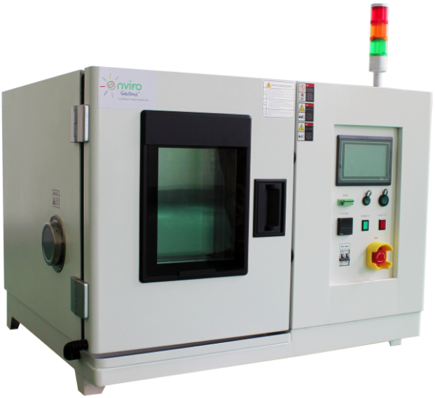
The comparison of HAST vs THB testing is a critical decision for reliability engineers qualifying plastic-encapsulated components and other moisture-sensitive devices. HAST uses pressurized conditions above the dew point to dramatically reduce test time from 1,000 hours to fewer than 100 hours compared to conventional THB.
HAST vs THB Testing: Head-to-Head Technical Comparison

HAST (Highly Accelerated Stress Test) Articles:
A Comparison of HAST to Conventional THB Testing
The use of HAST (highly accelerated stress test) for reliability assessment of nonhermetic packages is driven by reliability improvements in plastic packaging and passivation materials. Conventional Temperature/Humidity/Bias (85/85) testing is inefficient in measuring these reliability performance improvements. HAST is a highly effective and repeatable assessment tool for evaluating plastic package reliability provided appropriate controls are used. Important HAST to conventional 85/85 testing on 16Kx4 commodity SRAM’s. Data from multiple HAST runs on different lots of the same SRAM test vehicle shows the repeatability of the stress test. Data from the same SRAM part type stressed in 85/85 shows lower comparative accelerations for the same failure mechanisms. Surprisingly, metal-corrosion is not the dominant failure mechanism in these tests. Systematic AC parameter shifts are the predominant cause for failure. A relative acceleration factor for HAST over 85/85 testing is extracted based on AC parameter shifts in plastic-packaged parts succumbing to a moisture-driven failure mechanism. This data provides another example of HAST capability and an indication of the type of failure mechanisms that can be found with today’s plastic packaging materials.
This paper appears in: Electronic Components and Technology Conference, 1994. Proceedings, 44th, Abstract Plus
For more information, see our guide on complete guide to HAST testing methodology.
Comments
26 responses to “A Comparison of HAST to Conventional THB Testing”