


Category: Reliability Testing

  • Reliability Tests of Ultrasonic Bonding Methods Using HAST and THB

    Reliability Tests of Ultrasonic Bonding Methods Using HAST and THB

    This technical study examines ultrasonic bonding HAST testing as a method for evaluating the long-term reliability of wire bonds and die-attach interfaces under accelerated moisture stress. Both HAST and THB methods are applied to ultrasonic bond specimens to identify failure modes at the package and board interconnect level.

    Ultrasonic Bonding HAST Testing: Test Methodology and Findings
    Reliability Tests of Ultrasonic Bonding Methods Using HAST and THB

      HAST (Highly Accelerated Stress Test) Articles:

      Reliability Tests of Ultrasonic Bonding Methods Using HAST and THB

      Reliability is one of the most important questions in any application, on both the package (component) and the board (system) levels. The paper describes some life time test methods, equipment and processes for evaluating the most important reliability parameters. It gives a detailed description of the most effective and economical HAST (highly accelerated stress test) and THB (temperature humidity and bias) methods.

      The paper presents some new results of using HAST and THB technology for the following fields of reliability and life time tests: reliability analysis of assembled SMD passive components; water addition speed tests. Finally, the paper particularly deals with ultrasonic bonding technology, the bonding and testing machines. It introduces some measurement test results on the bonding force before and after a HAST and THB test.

      This paper appears in: Electronics Technology: Meeting the Challenges of Electronics Technology Progress, 2004. 27th International Spring Seminar

    For more information, see our guide on HAST testing fundamentals and JEDEC standards.

  • Meet the 85°C/85% RH Test: The Unsung Hero of Reliability Testing

    Meet the 85°C/85% RH Test: The Unsung Hero of Reliability Testing

    85/85 testing at 85 degrees C and 85% relative humidity is the cornerstone of moisture reliability qualification for electronic components. Despite being largely superseded by HAST for many applications, 85/85 testing remains a key requirement in JEDEC, IEC, and automotive standards worldwide.

    The 85/85 Test: How Temperature Humidity Bias Testing Works

    Meet the 85°C/85% RH Test: The Unsung Hero of Reliability Testing

    Meet the 85°C/85% RH Test: The Unsung Hero of Reliability Testing

    If you’re in the business of designing
    products that need to withstand heat, humidity, and time, you probably know
    about the 85°C/85% RH test. This amazing benchmark ensures reliability,
    durability, and environmental resistance across countless industries. It’s the
    ultimate endurance challenge for materials and components—a marathon where only
    the toughest survive.


    What Is the 85°C/85% RH Test?

    Expose a product to 85°C (185°F)
    and 85% relative humidity for up to 1,000 hours. This grueling test
    mimics some of the harshest environmental conditions, ensuring products perform
    reliably in real-world scenarios—whether on rooftops, in car engines, or in
    space.


    Industries That Rely on This Test

    This test is a universal favorite,
    playing a key role across industries:

    • Semiconductors: Ensures microchips thrive in
      humid climates.
    • Solar: Validates long-term performance
      under harsh sun and moisture.
    • Electronics: Tests gadgets from smartphones
      to PCBs.
    • Automotive: Guarantees reliability in humid
      or tropical environments.
    • Aerospace: Prepares avionics and sensors
      for extreme conditions.
    • Medical Devices: Ensures flawless performance in
      humid human environments.
    • Lighting: Extends the lifespan of outdoor
      LEDs.
    • Consumer Electronics: Torture-tests devices for
      vacation-proof durability.
    • Battery: Confirms lithium-ion batteries
      perform under pressure.
    • Telecommunications: Validates outdoor network
      equipment.
    • Building Materials: Verifies longevity of sealants
      and adhesives.
    • Appliances: Ensures washers and air
      conditioners endure humidity.
    • Renewable Energy: Tests wind turbines and fuel
      cells for durability.
    • Military: Prepares electronics for
      extreme environments.
    • Marine: Protects marine electronics
      from saltwater and humidity.


    Why Is This Test So Amazing?

    1. It’s Universal: Adopted across industries.
    2. It Mimics Real-Life Conditions: Simulates actual stress
      environments.
    3. It’s a Gatekeeper: Ensures only durable,
      high-quality products succeed.


    The Future of Reliability

    As industries innovate, the 85°C/85%
    RH test remains a gold standard. Whether you’re testing a single circuit board
    or a full-scale solar panel, we design test chambers for every need—from
    benchtop models to three-story structures. Whatever your
    challenge, we’ve got you covered.
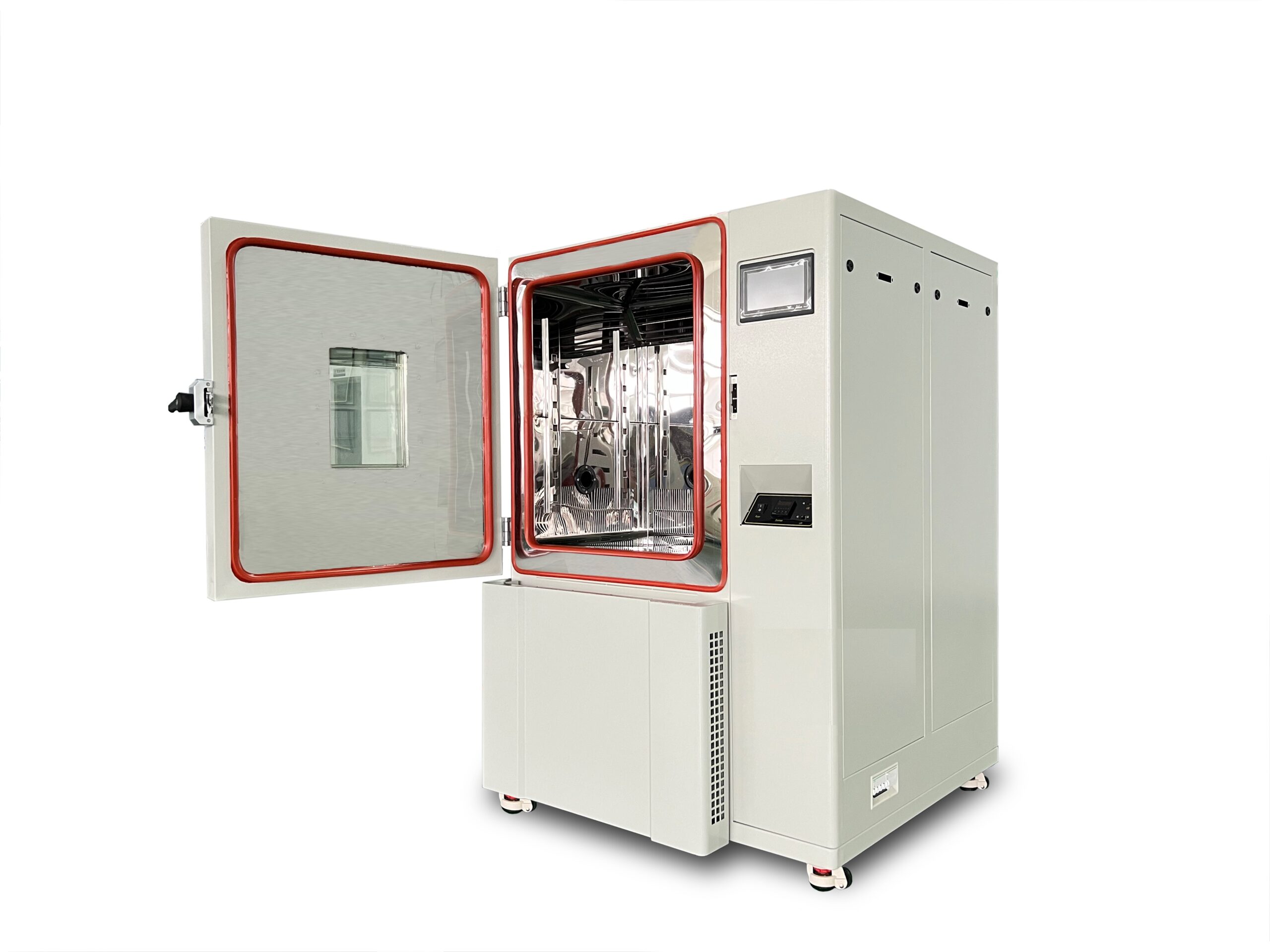
    Check out Temperature Humidity Chambers

    Let’s celebrate this unsung hero—the
    ultimate test that keeps our world running, no matter the heat or humidity.

    For more information, see our guide on HAST testing versus 85/85 testing explained.